climate action

Working together to reduce our climate impact at Premium Food Group
At Premium Food Group, we take responsibility not only for the quality of our food, but also for reducing the environmental impact of our operations. Climate change is one of the major challenges of our time. That is why we are taking concrete steps to reduce greenhouse gas emissions, use resources more efficiently and improve our environmental performance across our value chain.
Our approach includes sourcing regional raw materials, improving energy efficiency in our production processes and developing new packaging solutions. Through these measures, we aim to reduce the environmental impact associated with our operations and products.
Our goal is clear: to produce high-quality food while continuously improving the way we use resources and manage our impact on people, animals and the environment.
We are working to reduce the environmental impact of our operations at every stage – from animal husbandry and processing to packaging. Our focus is on reducing greenhouse gas emissions, using resources more efficiently and continuously improving our production processes.
Christian Bader, Sustainability

Climate targets validated by the Science Based Targets Initiative
We take our responsibility for climate action seriously and work closely with our partners in the agricultural sector. Our focus is on reducing greenhouse gas emissions across our operations and value chain through clear, measurable targets.
Our greenhouse gas emissions reduction targets were validated by the Science Based Targets initiative (SBTi) in 2024. These targets provide a clear framework for measuring our progress towards 2030 and support our efforts to reduce emissions in line with climate science.
Our ambitious goals
-42%
by 2030 (base year 2021)
scope 1 & 2 emissions
interim result 2024
-11% (base year 2021)
-25%
by 2030 (base year 2021)
scope 3 emissions
interim result 2024
-8% (base year 2021)
-30%
by 2030 (base year 2021)
emissions from agriculture and land use (FLAG)
interim result 2024
-12% (base year 2021)
Measuring emissions. Taking action.
Reducing greenhouse gas emissions starts with understanding where they occur. We calculate our Corporate Carbon Footprint (CCF) to identify and measure emissions from our own operations and across our value chain.
We update our CCF annually and use the results to identify opportunities for further emissions reductions and to track our progress over time. Our reduction targets cover emissions from our own operations (Scopes 1 and 2) as well as relevant emissions across our value chain (Scope 3).
These targets provide the framework for our actions and for measuring our progress towards 2030.
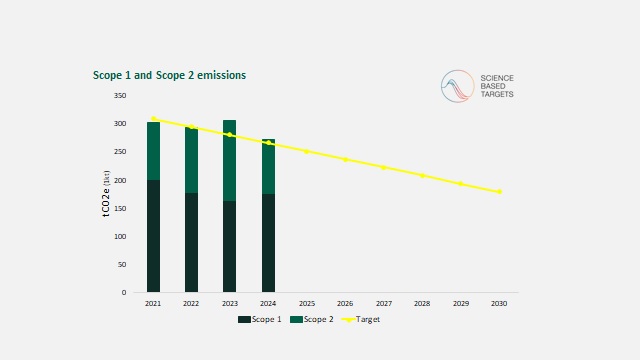
Scope 1 covers direct greenhouse gas emissions from sources that are owned or controlled by the company.
Scope 2 covers indirect greenhouse gas emissions associated with the generation of purchased energy used by the company, including electricity, steam, heating and cooling.
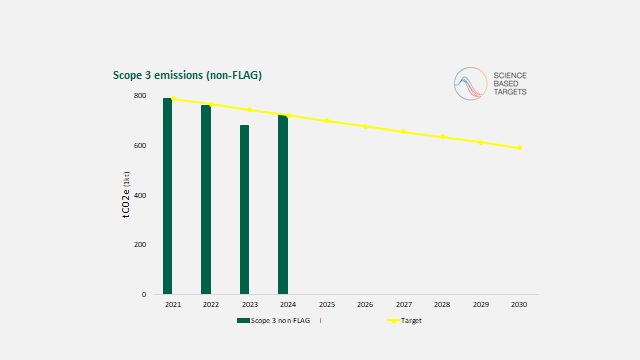
Scope 3 covers all other indirect greenhouse gas emissions across the company’s value chain, both upstream and downstream. These emissions arise from activities and sources that the company does not directly own or control but that are associated with its operations.
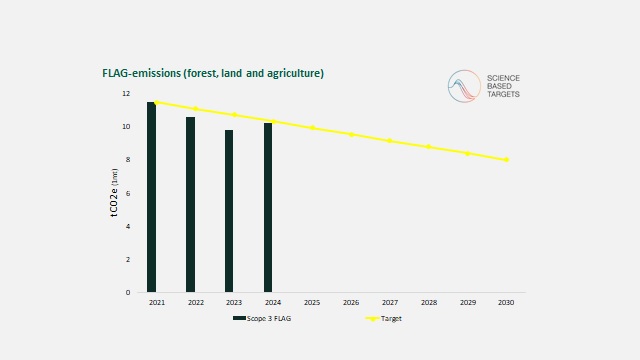
FLAG emissions (Forest, Land and Agriculture) are reported separately because this category covers both greenhouse gas emissions from land-based activities and carbon removals, such as the absorption of CO₂ by trees and other vegetation.
Our actions

Switching to renewable electricity
We are working to use energy and water more efficiently across our operations. Our aim is to reduce consumption through targeted measures and improvements to our production processes.
We are also increasing the share of renewable electricity used in our operations, with the aim of transitioning our electricity supply to renewable sources by 2030. Currently, 20% of our electricity comes from hydropower.
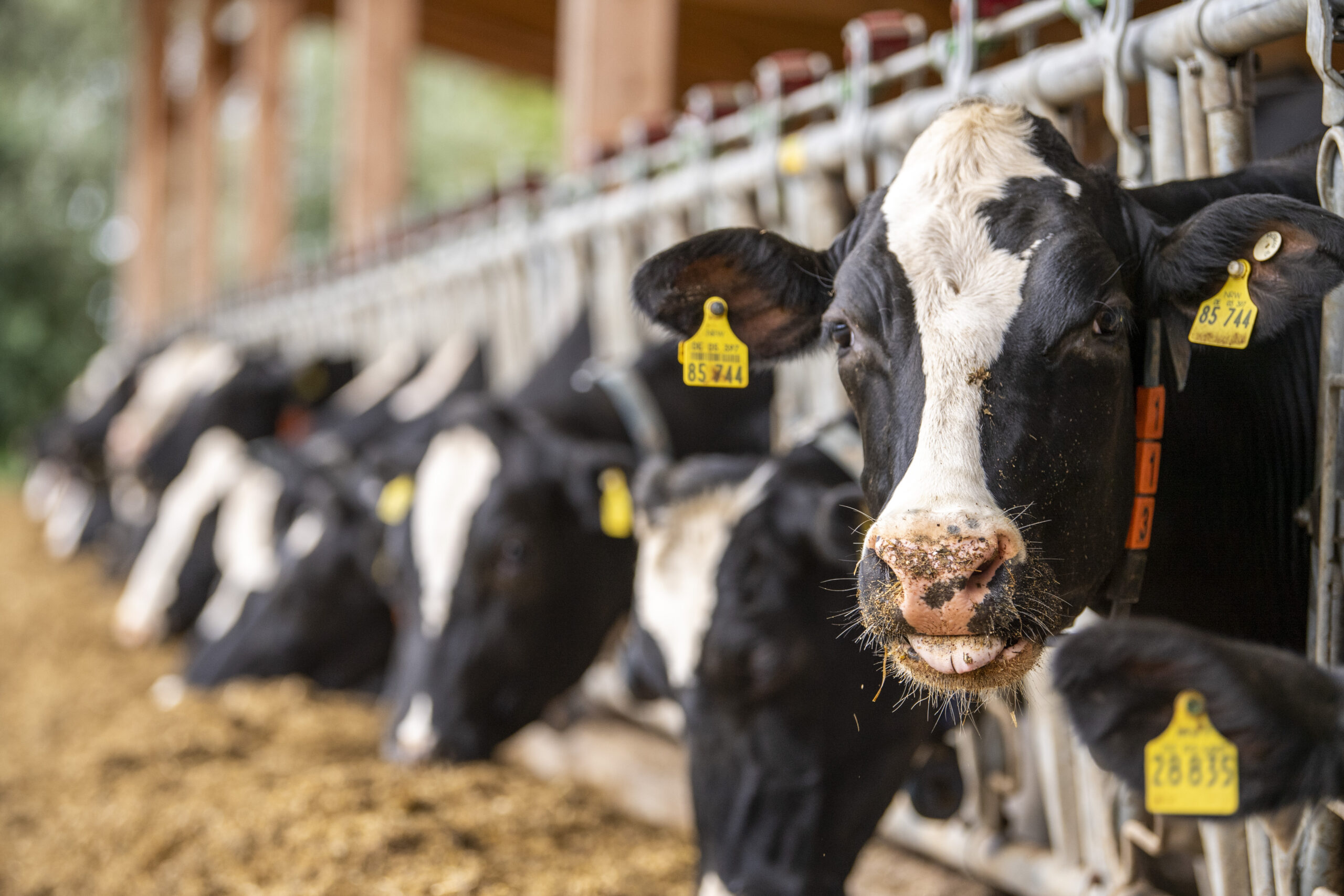
Deforestation-free feed for pigs and cattle
Protecting forests plays an important role in addressing climate change, preserving biodiversity and safeguarding the habitats and livelihoods of Indigenous Peoples.
We have already made progress in our feed supply chains. Since 1 January 2024, almost all soy used in feed for pigs, cattle and poultry within our German supply chains has been sourced in accordance with our deforestation-free requirements.
Our next goal is to transition the relevant raw materials in our supply chains to deforestation-free sourcing by the end of 2026.
Further details can be found in our official statement: Deforestation Statement
Making better use of resources – reducing food loss
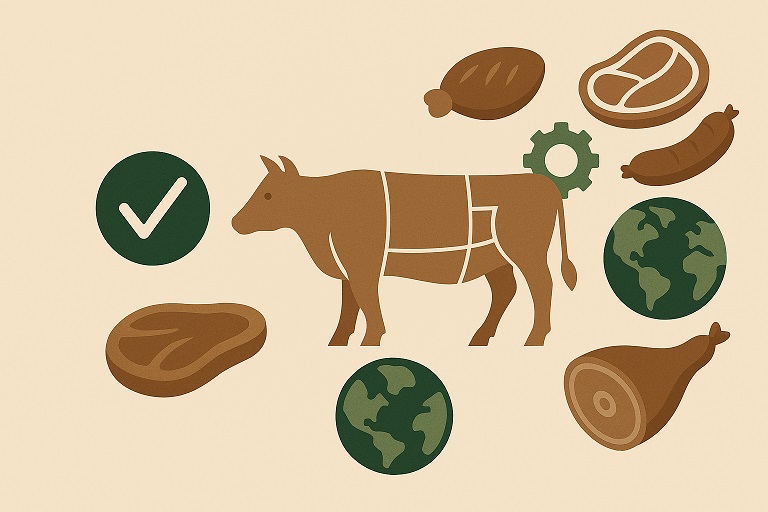
Reducing food loss is an important part of making more efficient use of resources. Through our whole-animal approach, we use more than 98% of each animal. This means that parts not used for conventional meat products can be processed for other applications, helping us to make more complete use of the raw material and reduce waste.
Contacts

